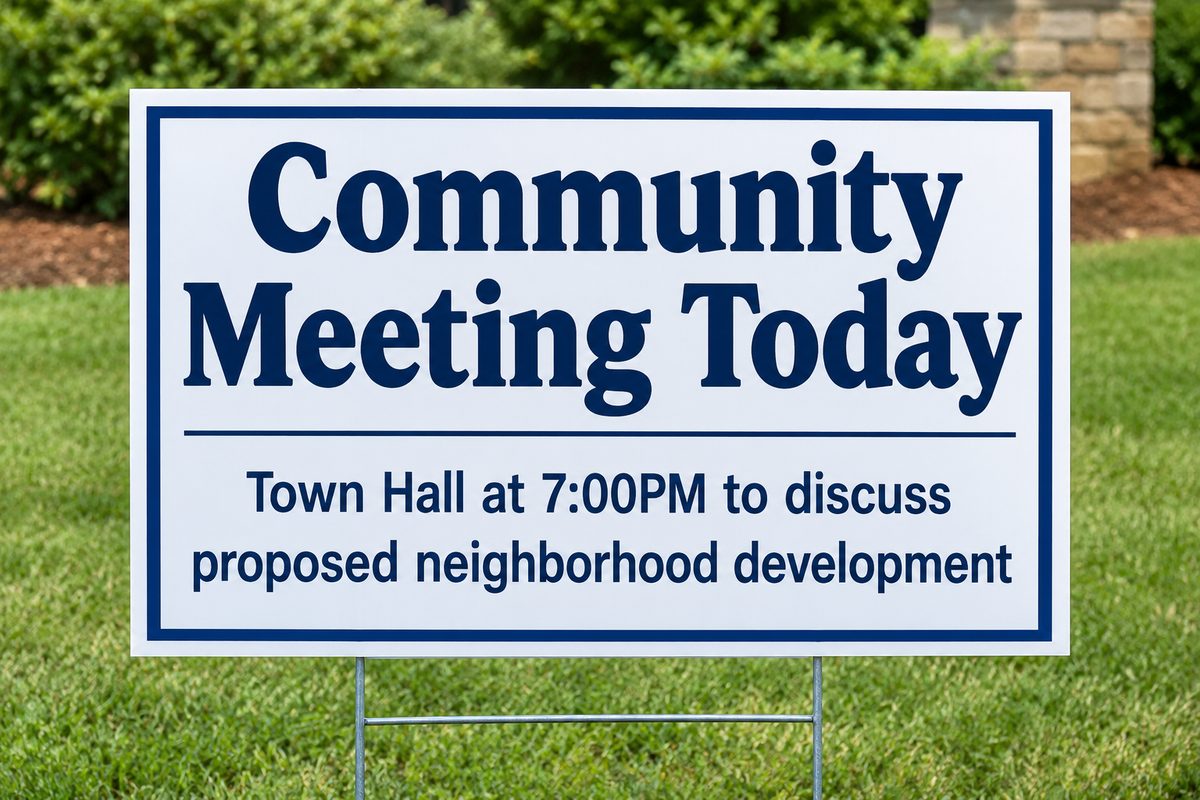
When word spreads through a neighborhood that a new development is being proposed, the reaction is almost always the same: concern before curiosity. Residents picture the worst — traffic backing up, mature trees removed, a structure looming over their backyard fence. None of that reaction is irrational. Without accurate visual information, people fill the gap with whatever their imagination supplies, and imagination tends toward worst-case. The community meeting is where those fears either get addressed or become a formal objection that follows a project through every stage of its approval process.
What separates a productive community meeting from a hostile one is almost always the quality of the visual information presented. Developers who walk into a town hall with site plans, zoning charts, and setback diagrams are answering engineering questions that the room isn’t asking. Neighbors want to know what they will actually see from the street, from their front porch, from their backyard. A photorealistic rendering built from the real site data — actual topography, surrounding structures, existing tree lines — answers that question directly. The conversation shifts from “I oppose this” to “Can you explain where that fence line falls?” That shift is not cosmetic. Questions about specifics are tractable. Blanket opposition driven by an inability to picture the project is not.
The timing of when a rendering enters the process matters just as much as the rendering itself. Developers who commission visuals only after receiving a formal objection are already playing defense. By that point, neighbors have had weeks or months to talk among themselves, plant signs, and organize resistance around a mental image of the project that may bear little resemblance to what is actually proposed. Introducing accurate visuals at the first public community meeting — before opinion has solidified — is a fundamentally different experience. Residents who feel informed from the outset are far more likely to engage with the substance of a project rather than its shadow. In markets where community input carries real weight in the approval process, this distinction can determine whether a project advances smoothly or spends an extra six months in appeals.
Parcel Vision produces renderings specifically built for this kind of early community engagement: accurate enough to withstand scrutiny, clear enough to communicate to a room with no technical background, and delivered on a timeline that fits the realities of a pre-submission outreach process. If you have a community meeting coming up and need visuals that will actually answer the room’s questions, reach out and tell us where you are in the process. We’ll tell you what’s achievable and what we’ll need to get started.